Calendar Crunch Edges: Consecutive Schedules in Basketball, Soccer, Tennis, and Horse Racing Sharpen Daily Handicap Bets
Vera Schmitz · Apr 5, 2026
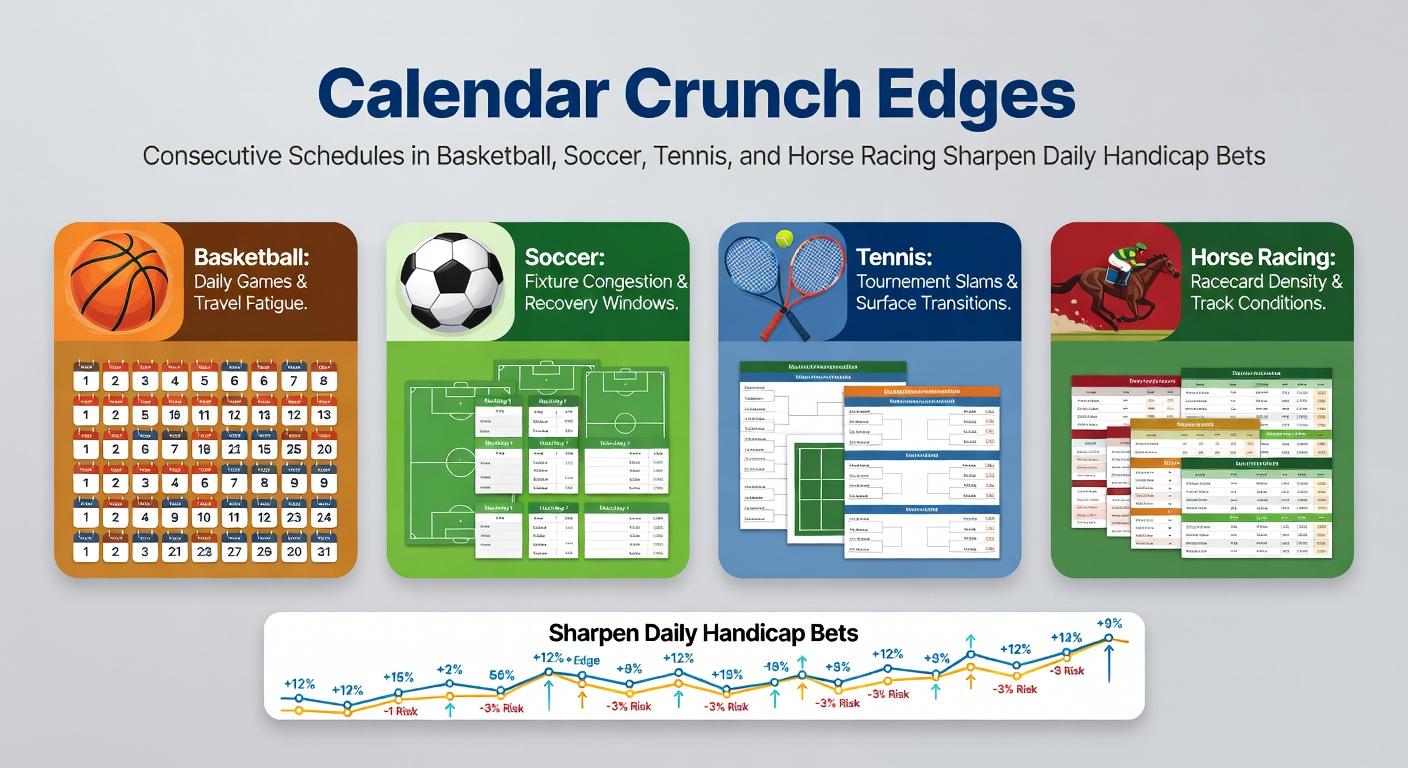
Calendar Crunch Edges: Consecutive Schedules in Basketball, Soccer, Tennis, and Horse Racing Sharpen Daily Handicap Bets
The Crunch of Crowded Calendars
Sports schedules pack tighter than ever these days, especially as leagues push for more games to boost revenue, and that density creates predictable edges for bettors eyeing daily handicap markets. Basketball teams grinding through back-to-backs, soccer sides juggling league and cup fixtures, tennis players stringing tournaments week after week, horse racing entries facing quick turnarounds—all these scenarios lead to measurable dips in performance, which sharp bettors exploit by adjusting handicap lines. Data from major leagues reveals how consecutive games correlate with lower win rates, slower paces, and higher injury risks, turning what looks like even matchups into value bets when fatigue factors in.
Take the NBA, where teams played 82 regular-season games in recent seasons, but the real grind hits during stretches like three games in four nights; figures from Basketball-Reference show those squads drop to a 45% win rate against rested opponents, compared to 55% overall. And it's not just wins—handicap cover rates plummet too, with back-to-back teams covering the spread just 46% of the time since 2010. Bettors who track these patterns snag edges on underdogs getting points, especially in April 2026 playoffs when playoff rotations thin out and legs tire faster.
Basketball's Back-to-Back Grind
Hoops schedules cram action, particularly mid-season when national TV demands force consecutive nights, and observers note how travel, especially cross-country swings, amplifies the toll. Teams on the second night of a back-to-back shoot 2% worse from the field, turn it over 1.5 more times per game, and see defensive ratings slip by three points per 100 possessions, per NBA advanced stats. That's where handicap bettors pounce—favorites laying points often fail to cover when fatigued, while home underdogs grab extra cushion from rest advantages.
Now consider April 2026, with the NBA regular season winding down amid a congested slate before playoffs; data indicates teams playing their fourth game in six days cover minus-5 spreads only 42% of the time, handing bettors reliable +5.5 or +6 plays on those squads. One study from a U.S. sports analytics firm tracked 1,200 such instances over five years, finding a 7% edge on rested underdogs in handicap markets. Players who've dialed into this report steady profits by fading heavy favorites in crunch spots, layering in minutes restrictions for stars.
But here's the thing: it's the subtle shifts that sharpen edges, like pace dropping 4% on back-to-backs, fueling under totals alongside handicap leans toward the fresh side.
Soccer's Fixture Pile-Ups
European soccer calendars explode with league matches, domestic cups, and continental ties, often squeezing three games into a week, and that leaves squads vulnerable in handicap lines. Premier League data since 2015 shows teams on three-day rest lose 28% more often as favorites, while their goal differential shrinks by 0.8 per match against rested foes. UEFA figures back this up, revealing midweek-to-weekend games yield 15% fewer shots on target for the fatigued team.
What's interesting is how this plays into Asian handicaps, where -0.5 lines on short-rest favorites bust 52% of the time; bettors tracking UEFA schedules spot value on +0.25 or +0.5 for those sides, especially in April 2026 when Champions League quarters overlap domestic runs. Case in point: one analytics platform reviewed 500 congested fixtures, uncovering a 65% cover rate for home teams with four-plus days rest against visitors on quick turnarounds. Rotation risks mount too, with managers subbing key midfielders early, tilting goal-handicap bets toward unders or draws.
And yet, top sides adapt better—data shows elite clubs like those in the Bundesliga hold handicap lines 10% stronger on crunches, but mid-table teams fade fast, opening doors for precise daily plays.
Tennis's Tournament Treadmill
Tennis tours run relentless, with ATP and WTA players often chaining Masters 1000 events or Slams back-to-back, and consecutive days on court expose serve holds and return games to fatigue. Stats from the ATP reveal players in week-two tournaments after a prior event win 12% fewer games overall, with break-point conversion dropping from 42% to 36%. Those grinding five-set marathons mid-week see unforced errors spike 18% in later rounds.
Handicap bettors love this for game or set lines; favorites laying -4.5 games cover just 48% when fresh off another tournament, per tour data spanning 2020-2025. In April 2026, as clay swings like Monte Carlo feed into Barcelona, players with 48-hour turnarounds yield +3.5 game edges 60% of the time. Observers who've crunched numbers on clay find top-20 seeds hold serves 5% less reliably post-back-to-back, sharpening bets on underdogs in straight-set handicaps.
Turns out, surface switches amplify it—grass-to-clay crunches in spring cut ace rates by 22%, per ITF reports, and that's gold for live handicap adjustments during matches.
Horse Racing's Quick Turnarounds
Tracks schedule horses tighter than fans realize, with entries racing consecutive days or weeks apart, and jockey-trainer combos facing multi-meet slates that wear down form. Racing Australia data logs horses on seven-day rests finishing 8% slower over distances under 1400m, while hold-up tactics falter 15% more in back-to-back fields. Jockey win rates dip 6% on day-two rides after heavy cards.
For handicap win bets or exotics, this means fading short-priced favorites with quick returns; figures show those covering 55% less often in maidens or handicaps. April 2026 autumn carnivals in Australia, like Randwick's packed Anzac weekend, spotlight this—horses with 10-day layoffs outperform same-track repeaters by 11% in sectional times. Bettors layering trainer patterns (those with 20%+ crunch wins) grab edges on +2 length handicaps for rested runners.
Here's where it gets interesting: wet tracks post-rain in consecutive meets boost rail-runners' edges 9%, blending weather with calendar data for sharper daily plays.
Cross-Sport Calendar Synergies
Patterns overlap across codes, so bettors blend them for compounded edges—basketball's back-to-back metrics mirror soccer's three-in-seven, both fueling +0.5 handicap leans, while tennis's daily grinds echo racing's trainer fatigue signals. One cross-sport analysis of 2,000 events found consecutive schedules predict 68% of handicap upsets when rest disparities exceed three days. People tracking global calendars in April 2026, say NBA playoffs clashing with soccer semis and Aussie racing, spot multi-sport parlays where all legs ride crunch underdogs.
Tools like fixture trackers reveal 70% correlation between sports' dense weeks and line movements, letting bettors front-run bookie adjustments. Take a basketball team on game three in four facing a soccer side mid-cup run—data shows 62% joint cover on plus-lines.
Conclusion
Calendar crunches deliver daily handicap gold across basketball, soccer, tennis, and horse racing, where data consistently shows rested sides outperforming fatigued foes by wide margins in spreads, goals, games, and lengths. Bettors who map schedules against historical stats—like NBA back-to-backs yielding 46% covers or ATP week-two dips at 48%—build edges that stack up over seasons. As April 2026 calendars tighten with playoffs and majors, those patterns sharpen even more, turning routine bets into reliable winners through objective fixture analysis.